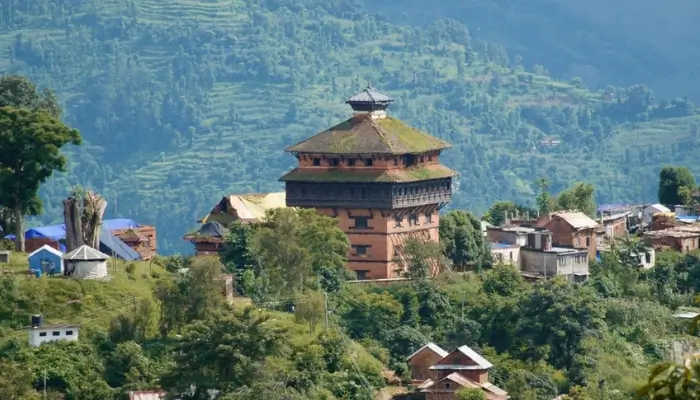
Visit the historical and cultural center of Nuwakot
Many monasteries were built in Nuwakot during the time of Prithvi Narayan. The famous Bhairavi Temple and Sindure Jatra, as well as the Taleju Temple, the Narayan and Vishnu Temples, Narayan Jatra, Sipahi Jatra, Ropai Jatra, Takatuke Jatra and Lakhe Jatra, are considered to be the major cultural achievements of Nuwakot district.
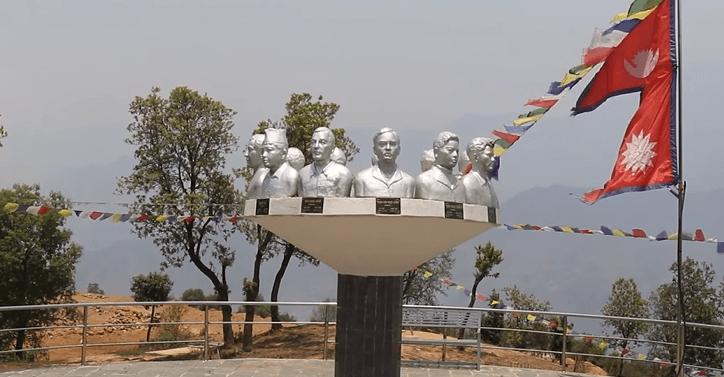
Nuwakot district has a distinct importance in the history of Nepal. The historicity of Nuwakot, which is connected to the capital, is found to be linked in many ways to the life of the nation-builder Prithvi Narayan Shah.
Nuwakot, which is located on the main route to Gosainkunda in Rasuwa, which is known as a religious place for Hindus, is also a district consisting of nine forts, therefore it is also a religious city.
Trishuli, Tadi, Chhatrekhola and other small rivers have irrigated the agricultural land of Nuwakot. The Trishuli River, which originates from Gosainkunda in Rasuwa district, has also generated electricity at three places in Nuwakot.
The rice of Shikharbesi is considered famous in Nuwakot district. The hills of Thansing, Jiling, Khadkabhanjyang in Nuwakot district, which has fertile lands like Samundratar, Kharanitar, Bartar and Gerkhutar, are considered beautiful places.
Naming
Nuwakot district was under West No. 1 before Nepal was divided into 14 zones and 75 districts. There is a historical saying that the name of this district was corrupted from Nawakot, Nawakotya, Nawakwath, Naukot during the Gopal dynasty and became the current Nuwakot.
Although the name of Nuwakot district Nepal was derived from Nau Kot, Salyankot and Dhuwakot West. 1 No. When the district was divided in 2019, it was placed in Dhading district and Kalikot in Rasuwa district, and the remaining Nuwakot, Belkot, Malakot, Pyaskot, Simalkot, Bhairamkot are in Nuwakot district.
On the administrative basis, there are more than 1200 settlements in this district, divided into three parliamentary constituencies, 10 rural municipalities and 2 municipalities. In the past, the district headquarters, which was located in the Nuwakot Durbar Square, is located in Bidur.
History of Nuwakot
King Prithvi Narayan Shah had expressed a great desire to establish a unified and prosperous Nepal by merging the small kingdoms called Baise-Chaubise in the Nepal Valley and the Gandaki and Karnali rivers. In this context, a campaign was launched from the western gateway of the valley and the main trade route with Tibet.
At that time, Nuwakot, subordinate to Kantipur, was considered a strong strategic fortress. As a result, only after the third attack after extensive preparation, the Gorkhali were victorious in 1801 BS. After the conquest of Nuwakot, it was easy to understand the current affairs of the Kantipur Valley by taking it as the capital.
As a result, on the day of Indrajatra in 1825 B.S., the city of Kantipur fell into the hands of the Gorkhali army. Thus, the unification campaign progressed. Also, on 1 Magh 1831 B.S., Prithvi Narayan died at Devighat in Nuwakot district.
In addition to his successor king, brave warriors like Balabhadra Kunwar, Bhimsen Thapa, and Amar Singh continued to expand this campaign. At that time, the British rulers who were expanding their empire in India were suspicious of this campaign of Nepal.
Due to which, due to the Sugauli Treaty concluded in 1837 B.S., Nepal had to lose the Mechi in the east and the Rapti in the west. Due to these various reasons, the expansion of Nepal’s borders was obstructed after the Sugauli Treaty.
In 1857, the then Prime Minister Jung Bahadur Rana provided significant military assistance to the British to suppress the Indian Sepoy Rebellion, and in return, the four districts of Banke, Bardiya, Kailali, and Kanchanpur, now known as the New Kingdom of Western Nepal, were returned to Nepal.
Therefore, many brave rulers and brave soldiers have played an important role in the formation of the present form of Nepal.
The victory of Nuwakot was seen as a sign of success in this unification campaign. King Prithvi Narayan Shah spent an important period of time from 1801 to 1825 in Nuwakot. Prithvi Narayan Shah moved to Kaligarh in Lalitpur and had a magnificent nine-story palace built in 1819.
Later, due to the great earthquake of 1991, two floors collapsed and only seven floors remained. According to archaeologist Dr. Safalya Amatya, at that time, the Malla kings used to build houses with five floors and the common people used to build houses with up to three floors.
But to break the pride of the Malla kings of the valley, Prithvi Narayan Shah ordered the construction of a nine-story palace in the style of a temple. This was used as a summer palace, and another winter palace, Shera Palace, was built in 1822 B.S.
The palace was built in such a way that attackers could be seen from afar from the bardali of the palace and a cage was also built in the palace for prisoners of war. In front of this palace, there is also a Tilinga house (which later came to be called ‘Garad Ghar’). In addition, the meeting house of Rana Bahadur Shah in the northeast corner was also built during the Shah’s reign.
Cultural aspects
Nuwakot is also considered a culturally rich district. The cultural fairs, festivals, and festivals prevalent in the valley during the Malla period are also held in Nuwakot. Many monasteries and temples were built in Nuwakot during the time of Prithvi Narayan.
The famous Bhairavi Temple and Sindure Jatra, as well as Taleju Temple, Narayan and Vishnu Temples, Narayan Jatra, Sipahi Jatra, Ropai Jatra, Takatuke Jatra and Lakhe Jatra are considered the major cultural achievements of Nuwakot district.
With the transfer of the district headquarters from Nuwakot to Bidur in BS 2020, some cultural traditions are disappearing. The Newar community who migrated to Nuwakot from the valley during the Malla period named their tol bazaars such as Indrachowk, Brahmatol, etc., which are still in effect. It can be assumed that some of these Newar castes may have come to build the seven-story Nuwakot Durbar.
Geographical situation of Nuwakot
Located in the hilly region according to geographical division, this district is spread out in an almost crescent shape from east to west. In this district, various geographical features including flat valleys and tars scattered here and there between the southern slope of the high hilly region and the picturesque hilly region can be found.
According to geographical structure, the hilly land of Nuwakot district is 71 percent, the mountainous land is 18 percent, and the tar, valleys and flat land is 11 percent. The total area of Nuwakot district is 1,121 square kilometers.
Historical seven-storey palace
The seven-storey palace of Nuwakot, which has made an important contribution to shaping modern Nepal, is located four kilometers from Bidur. This palace, which stretches from north to south and is located on a hill of about 970 meters in height, has historical and political importance.
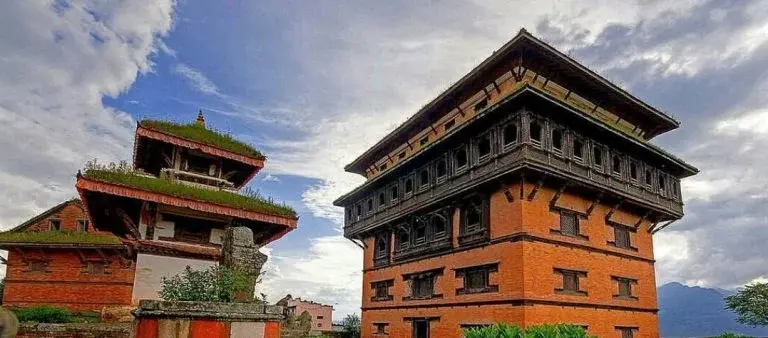
After conquering Nuwakot, Prithvi Narayan made Nuwakot the second capital to advance the expansion of the state. After Prithvi Narayan Shah conquered Nuwakot, the seven-storey palace became the main center of activity. Prithvi declared Nuwakot as his capital. It remained as the capital for about 25 years.
During the reign of Rana Bahadur Shah, due to family disputes, Rana Bahadur ruled Kantipur from Patan and his son Girwan from Nuwakot. Prithvi’s youngest son Bahadur Shah was born in Nuwakot and was imprisoned in Nuwakot after a conspiracy against him.
Similarly, in March 1793, a delegation led by the English envoy William Kirkpatrick visited this palace when King Rana Bahadur and Mukhtiyar Bahadur Shah came to Nuwakot for goddess worship.
King Girwan Yudh Bikram received the certificate of the position of E. Gardner, the first British Resident Representative to Nepal, in 1816 BS (1873 BS). During the unification campaign, King Trivikram of Tanahun and Balan Singh of Kirtipur were also imprisoned in the palace.
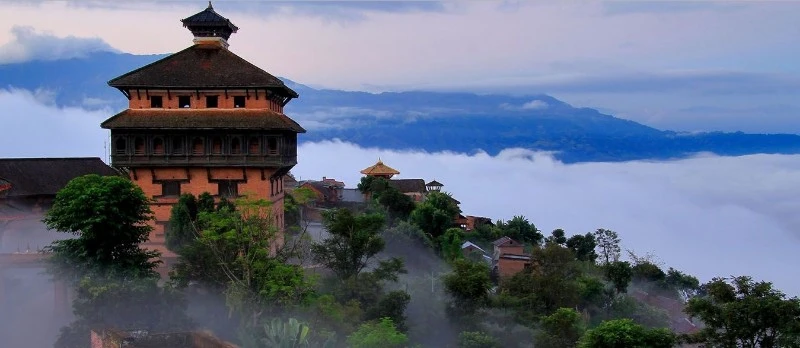
The seven-storey palace of Nuwakot is famous for its arched windows. There are arched windows on many of its floors. All of them are artistically carved and decorated. The third floor is more artistic and eye-catching than the other windows. The woodwork used in the windows of the second and fourth floors is also attractive.
The arched windows used on the fourth floor are beautiful and spectacular. The small windows used on the fifth and sixth floors are made in an artistic style. Although these windows can be seen from a long distance, nothing can be seen from outside.
The dark dungeon on the sixth floor of the palace is famous. Enemies were imprisoned there. From the seventh floor, all the surrounding scenery – the green hills, Trishuli Bazaar, the confluence of Tadi and Trishuli rivers, and the Sera Phat – can be seen.
Bhairavi Temple in the Nuwakot Durbar Complex, Taleju Temple, Dupcheshwor Mahadev in Rautveshi, Jalpadevi Temple in Devighat, Natyeshwor Mahadev Temple in Kabilas, etc. are the major religious pilgrimage sites in the district. Currently, the Chinese government is starting the reconstruction of this palace complex.
Jalpadevi and Bhairavi Sister
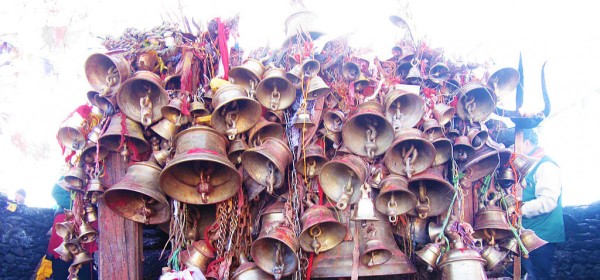
Jalpadevi in Devighat and Bhairavi Temple in Nuwakot, which are considered to be the major religious pilgrimage sites in the district, hold a vermilion procession every year on the full moon day of Chaitra.
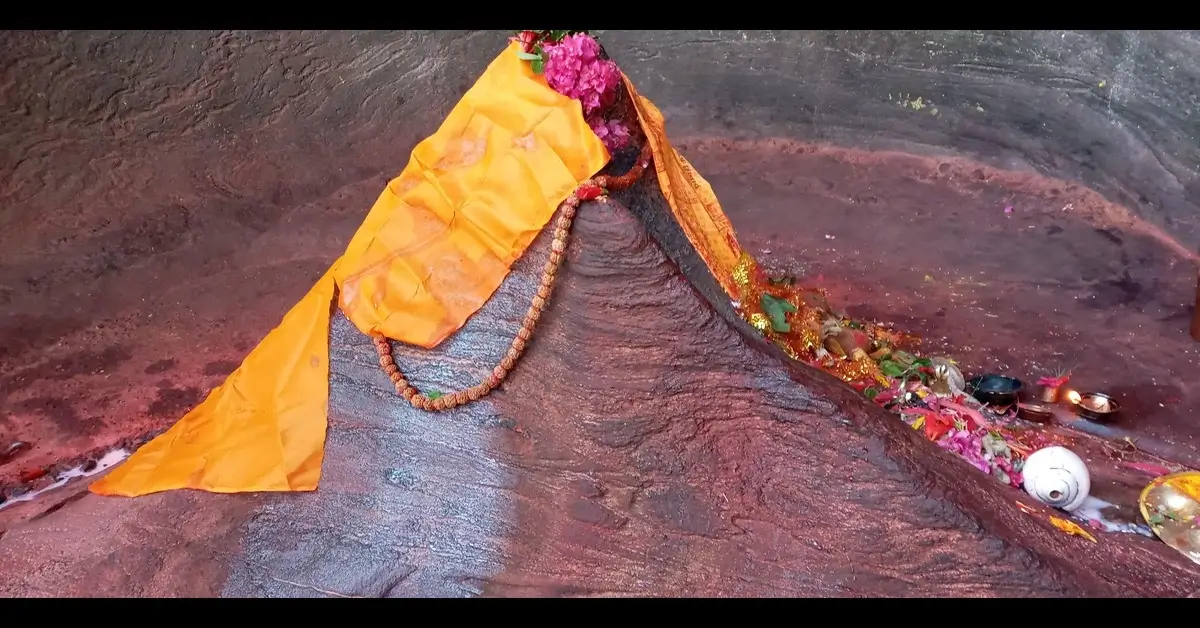
On the Chaturdashi day, a pine cone is installed in front of the Bhairavi Temple. During the fair, it is customary to offer animal sacrifices along with worship at the Jalpadevi Temple in Devighat. According to religious beliefs, it is believed that Bhairavi Devi in the Nuwakot temple complex is the sister and Jalpadevi in Devighat, the confluence of the Tadi and Trishuli rivers, is the sister.
To meet these two sisters once a year, Bhairavi Devi is brought to Devighat with Bajagaja and Sindoor Jatra. A large number of devotees from the surrounding districts of Nuwakot and elsewhere come to this fair and it is considered famous as Devighat Jatra.
The Jatra held every year on Dhanya Purnima at the Dupcheshwor Mahadev Temple, located in the middle of a huge mountain, is another big festival of the district.
Located in Rautbeshi Ward No. 8, 35 kilometers east of the district headquarters, Bidur, this temple is not only religious but has also developed as a tourist destination. The Jatra, which starts on the day of Ekadashi in Mangsir, ends only after the Purnima.
People from outside the district also visit this place during the fair and other times. A large number of domestic tourists come from Dhading, Rasuwa, Sindhupalchowk, Kavrepalanchowk, Kathmandu, Lalitpur, Bhaktapur, Chitwan, Gorkha and other districts. Local Jhanki dance, Hyalmo songs and Sherpa dance are another speciality here.
A special fair is held on the days of Pusheonshi and Kusheonshi at Betravati, the confluence of the Salakhu and Malakhu rivers on the border of Rasuwa and Nuwakot, known as Uttar Gaya. On these days, especially those who do not have parents go to the pilgrimage site and perform rituals such as bathing and worship.
Apart from these, fairs are held at various times at religious and tourist places such as the Natayeshwor Temple in Kabilas, Sagar Kund, etc. The bullfighting festival organized every year on the day of Maghe Sankranti in Taruka VDC of Nuwakot also holds special importance.
According to legend, when the Bajhangi king Jayaprithi Bahadur Singh came to his maternal uncle’s house, the maternal uncle fought a bull to welcome his nephew, and it is said that the tradition has continued since then.
The bullfighting festival, which started to welcome the king, is now being viewed with tourist importance. Visitors from places around Nuwakot such as Dhading, Rasuwa, Chitwan, Kaski, Kathmandu and other places come to the festival.
Nuwakot with tourist potential
Not only is it a subject of historical importance, Nuwakot is currently developing as a tourist destination. Bidur Bazaar, the district headquarters of Nuwakot district, located 70 km from Kathmandu, has become a study site for domestic and foreign tourists.
Ranipauwa, which is on the way to Nuwakot from Kathmandu, attracts tourists. From Ranipauwa, not only the Lamtang Himal in Rasuwa district can be seen, but also the settlements and hill ranges of dozens of villages in the southern part of Rasuwa district such as Ramche, Kalikasthan, Jivjibe, Dhaibung, Laherepauwa.
Not only this, most of the geography of Nuwakot district and dozens of villages including Budhsingh and Taruka in Dhading district can be seen from Ranipauwa.
Similarly, the 17 km motor road from Baireni to Bidur in Dhading district on the Prithvi Highway has become a short route for people going to Nuwakot from the Terai.
The major tourist attractions here like Kakani Chirkeshwor Danda, Bagmara Sagar Kund, Bhalche Sheep Farm, Chisapani Mala Bhanjyang, Kala Bhanjyang, Golfu Bhanjyang have become additional attractions for people visiting Nuwakot these days. Recently, the Pasang Lhamu Highway connecting Nuwakot with Kathmandu is also being developed as the ‘Rainbow Trout Highway’.
Recently, different trekking routes have been sought to promote the tourist attractions of the district. The nine-day trekking route from Shivapuri in Kathmandu to the Sattale Durbar in Nuwakot ends with the Shivpuri Alchhe-Purnakukhure-Manebhanjyang Mangkedanda-Samudratar Sundaradevi-Bagmara Malabhanjyang trek, where tourists can experience the lifestyle, culture, local costumes and natural scenic views. Nuwakot district is considered good for nature lovers.
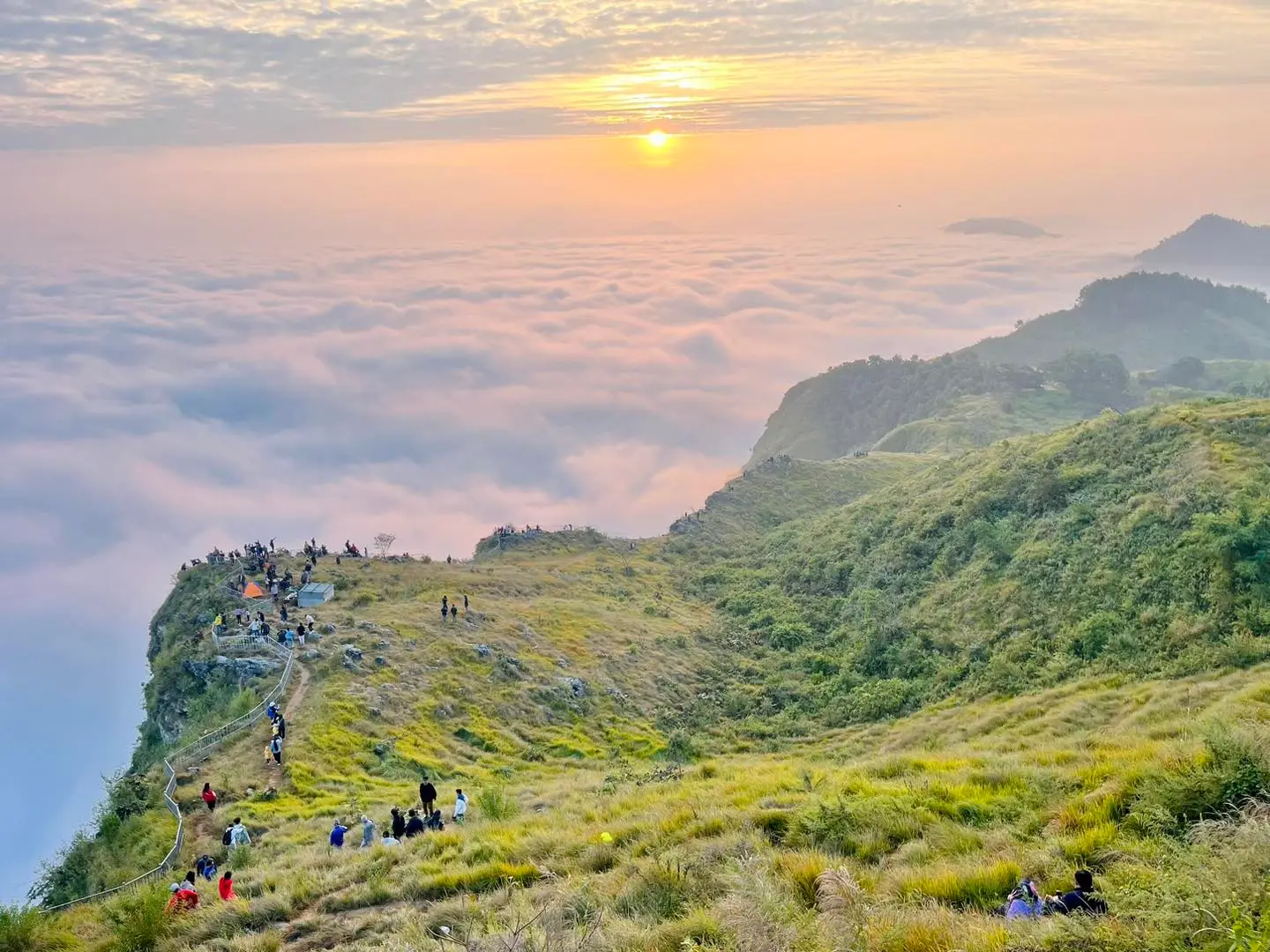
For nature lovers, Sagarkund and Rahuchuli, located near Bagmara, are another attractive natural heritage here. From Rahuchuli, most of the Kathmandu Valley as well as the entire Nuwakot can be seen.
Let’s go to Nuwakot once, not only to study the history but also to explore the natural scenery and help in the development of domestic tourism.
Related Posts
Recent Posts
-

Amazing Pashupatinath Temple Guide: Timing, Entry Fee & Travel Tips 2026
Mar 17, 2026 | Umesh Thapa
-
India’s Ceramic Tile Industry: Growth, Innovation, Exports, and Future Opportunities
Mar 02, 2026 | Umesh Thapa
-
What Is the Indian Legend Regarding the Discovery of Tea?
Mar 02, 2026 | Umesh Thapa
-
Budget Travel Tips for Expensive Cities USA: How to Explore Without Overspending
Mar 01, 2026 | Umesh Thapa
-
Top 5 Best Visiting Places in Nepal (2026)
Feb 28, 2026 | Umesh Thapa


Popular Posts
-

-

Discover Manungkot: A Hidden Gem in Nepal
Sep 06, 2025 | Umesh Thapa 649 views -

Annapurna base camp trek
Nov 02, 2025 | Umesh Thapa 409 views -

Pathivara Mata Temple Travel Guide 2026 (Trek Distance, Cost & Route)
Oct 29, 2025 | Umesh Thapa 391 views -

Ghyangswara Park: The Ultimate Peaceful Nature Destination in Nepal
Oct 15, 2025 | Umesh Thapa 340 views